How Early Should You Stitch a Wedding Sherwani in Mumbai?
3 June 2026 / 7 min read
A practical timeline for grooms: when to start, when to choose fabric, when fittings should happen, and what not to leave for the last week.
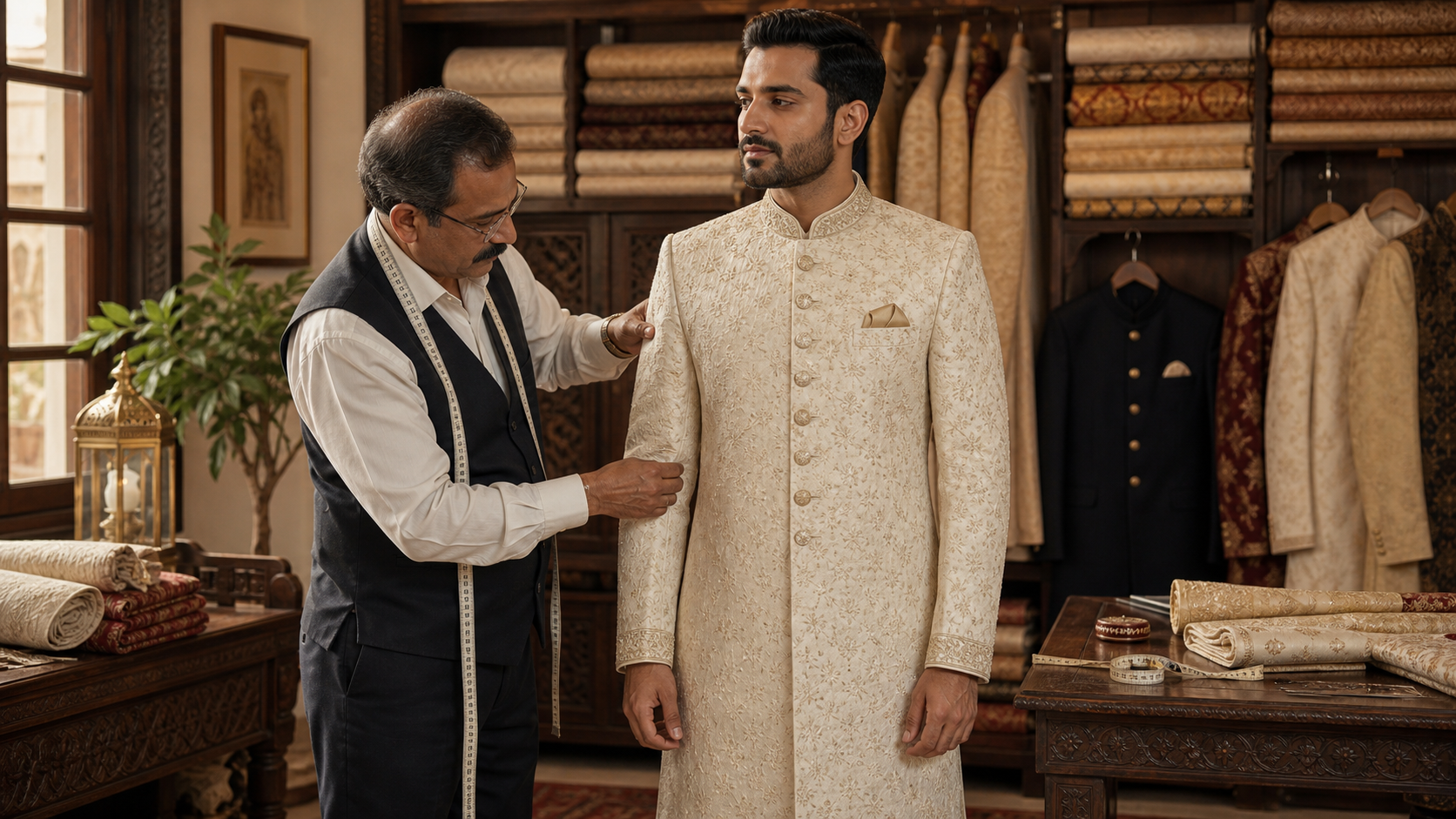
A wedding sherwani is not a garment to rush. It needs fabric selection, embroidery decisions, body measurement, cutting, trial, correction and final finishing. If you wait until the last week, the tailor can still make something, but the fit and detailing will usually show the compromise.
Start six to eight weeks before the wedding
For most grooms, six to eight weeks is the right window. It gives enough time to choose fabric, decide the silhouette, cut the garment, complete embroidery or finishing work, and still leave room for proper trials.
If the sherwani has heavy hand embroidery, custom motifs, unusual fabric sourcing or a full coordinated family look, start closer to eight to ten weeks. The extra time is not wasted. It protects the final fit from rushed decisions.
Fabric comes before design
Many grooms start with a saved photo. That is useful for direction, but the fabric decides what is actually possible. Brocade, raw silk, chanderi, velvet and jacquard all sit differently on the body.
Mumbai weather matters too. A sherwani that looks rich but feels heavy can become uncomfortable during a long ceremony. The cloth should match the event timing, venue, season and how long you will wear it.
The first fitting should not be the final fitting
The first trial is where shoulder, chest, sleeve pitch, front fall and length are judged. This is not the moment to expect a finished look. It is the moment to catch the problems that are difficult to fix later.
A second fitting should confirm movement and balance after corrections. You should be able to sit, walk, raise your arms slightly and stand naturally without the garment pulling across the chest or collapsing at the shoulder.
Coordinate without matching everything
A groom’s sherwani should coordinate with the bride’s outfit, the wedding palette and the family clothing, but it does not need to copy every colour exactly. Exact matching often looks flat in photographs.
Better coordination comes from controlled contrast: ivory with muted gold, cream with maroon accents, deep navy with antique buttons, or a stole that connects the groom’s look to the ceremony palette.
Do not leave accessories until the end
Buttons, stole, safa, footwear and pocket details change the final proportion. If these are chosen after the sherwani is complete, the look can feel assembled rather than tailored.
Bring reference photos, footwear height and any important accessories to the fitting. A small change in footwear or stole length can affect how the full outfit reads in person and in photographs.
A groom’s sherwani timeline
- 8-10 weeks: start if embroidery, custom motifs or family coordination is involved.
- 6-8 weeks: ideal start for most wedding sherwanis.
- 4-5 weeks: fabric and design should be locked.
- 2-3 weeks: first fitting and major corrections.
- 7-10 days: final fitting, accessories and finishing.
- Last week: only minor adjustments should remain.