Custom Suit vs Readymade Suit: What Actually Changes in the Fit
3 June 2026 / 6 min read
A practical Mumbai tailoring guide to shoulders, canvas, trouser balance, fittings and when a custom suit is worth it.
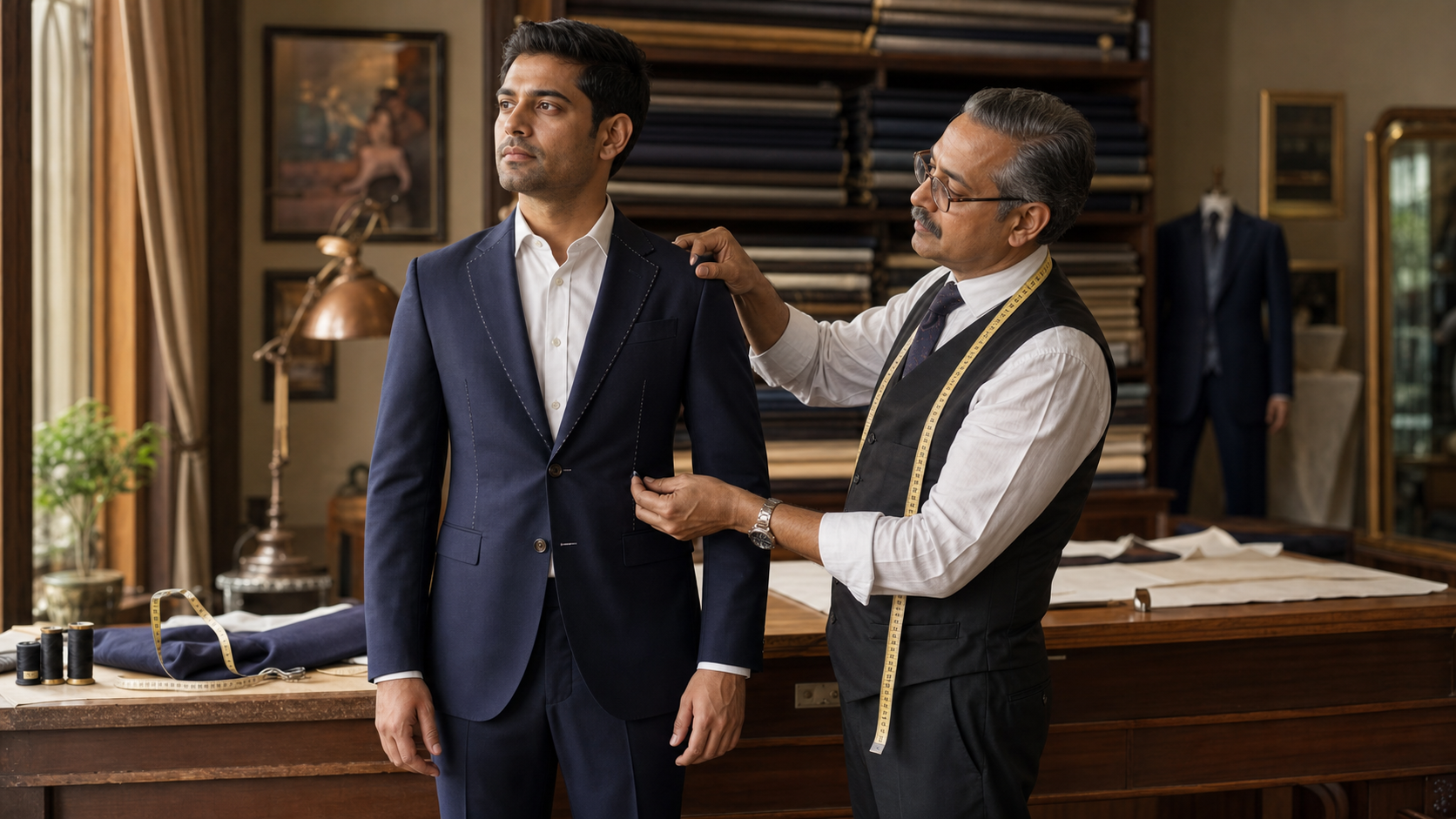
A suit can look acceptable in a mirror and still fail when you sit, walk, shake hands or stand under event lights. The real difference between custom and readymade is not luxury wording. It is control: shoulder, chest, canvas, balance, trouser line and the fittings that correct them.
The shoulder decides more than the label
The first thing to check in any suit is the shoulder. A readymade jacket is cut to an average body, so the shoulder often sits too wide, collapses near the sleeve head, or pulls at the back. Small alterations can clean the waist, but they rarely fix a bad shoulder without rebuilding the jacket.
A custom suit starts from your stance, shoulder slope and chest shape. That matters if one shoulder sits lower, if you carry your chest forward, or if readymade jackets always feel tight when you lift your arms.
Canvas changes how the jacket lives on the body
Many readymade jackets use fused construction, where fabric is bonded with adhesive. It can look sharp on the hanger, but it may feel flat and can lose shape faster in Mumbai heat and humidity.
A well-made custom jacket can use canvassing through the chest so the front has structure without feeling stiff. The result is not loud. It simply sits cleaner, rolls better at the lapel, and improves with fittings.
Trousers need balance, not just the right waist
Most people judge trousers by waist size. Fit problems usually come from rise, seat, thigh and leg line. If the back pulls, the pockets flare, or the fabric twists near the knee, the trouser is not balanced for your body.
Custom trousers let the cutter decide the rise, waistband, pleats, side adjusters, cuff and break together. That is why a tailored trouser can feel easier to wear even when it looks sharper.
Readymade still has a place
Buying readymade is reasonable when the event is close, the fit is already good, or the garment will be used lightly. It is a mistake only when you expect a standard size to behave like a pattern made for you.
If a readymade suit is close, alterations can improve sleeve length, trouser length, waist suppression and minor trouser shaping. If the shoulder, chest or balance is wrong, custom tailoring is the cleaner route.
When custom is worth it
Choose custom for weddings, receptions, important business use, unusual body proportions, or when you want a specific cloth and silhouette. It is also the better choice when you dislike how readymade jackets sit even after alterations.
For a suit, plan enough time for consultation, fabric selection, cutting, trial and final finishing. For wedding tailoring, start earlier than you think. The best results come when fittings are not rushed.
A simple fitting-room checklist
- Shoulder seam should sit at the natural shoulder, not drop over the arm.
- Lapel should lie clean against the chest without lifting.
- Jacket should close without pulling into an X shape at the button.
- Sleeve pitch should allow the arm to rest naturally.
- Trouser seat should not pull, sag or flare at the pockets.
- Hem break should match the shoe and occasion.